

 Get Quotations


Manufacturers, Wholesalers, B2B Philippines











Popular Products
 |  |
|---|












This Months Selected Manufacturer, Wholesaler,
Exporter and Service Provider




Featured Manufacturer


Featured Manufacturer


Featured Importers
Featured Importer

Featured Importer


Join Manufacturers, Wholesalers and Suppliers in B2B Philippines
Mayari.com.ph is an ONLINE PRODUCT SOURCING SITE designed to help Philippine Manufacturers, Wholesalers, Exporters and Suppliers get qualified buyers and purchasers worldwide. Mayari.com.ph also helps qualified buyers search for verified Filipino Manufacturers, wholesalers, supplier/vendor, importer, exporter,and distributors by providing them an easy to use search and communication system.Membership is free and open to all . Registration is a breeze. If your having trouble we can even provide an account specialist to assist you in creating you account. To protect users and buyers we are displaying suppliers and their respective products with supplier verification badges. The supplier has an option to bepresented as verified supplier or unverified supplier. At the moment verification is free to all supplier applicants. It is our task to ensure that qualified buyers are aware of who is legal and trust worthy among suppliers
For Manufacturers/Wholesalers ,mayari.com.ph is a web portal that will provide free online marketing, internet marketing and online promotions, limited only to Filipino manufacturers and Filipino made products. To encourage investors to outsource from the Philippines and most specially to convince them that it is always safe to do business in the Philippines, we have instituted our own verification and accreditation process. Our accreditation process has levels and procedures. Once approved you shall enjoy free marketing and promotions online. You shall also have your own website, Online messaging system, you own dashboard, reports for sales, stocks statistics with charts and graphs and a lot more. For you to be approved or accredited we shall require legal documents such as your SEC / DTI registration or Permit to operate for us to verify. Again, our accreditation and verification is simple and free. Verification is essential for us and for you to attract foreign investors and even local buyers.
- Details
- Hits: 143
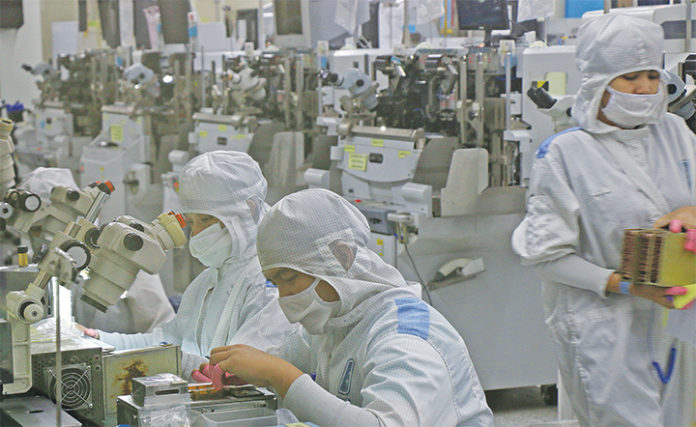
THE manufacturing sector continued to get the lion’s share of the gross foreign direct investments (FDI) channeled to the Philippines in the first four months of the year, according to data from the Bangko Sentral ng Pilipinas (BSP).
Of the $2.9 billion FDI that flowed into the Philippines in January to April, the manufacturing sector received one-third, or 33.51 percent. Other recipients of large FDI are the transportation and storage sector with 28.84 percent; financial and insurance services, 26.52 percent; and real-estate activities, 26.16 percent.
FDI is the type of investment that is often more coveted, as it stays longer in the economy and creates job opportunities for locals. These investments are also usually an indicator of long-term sentiment of the global community regarding the country’s economy as FDI are not easily pulled out of the market, unlike its shorter-term counterpart, the foreign portfolio investments.
In contrast to manufacturing, agriculture, education and human health and social work activities attracted few foreign investments, and accounted for only less than 2 percent of gross FDI during the period.
In terms of growth, however, FDI to the manufacturing sector were down by 78 percent from last year’s record. The decline was offset by the strong growth in FDI obtained by the transportation and storage sector, administrative and support service activities, and the information and communications sector.
- Details
- Hits: 143
THE manufacturing sector continued to get the lion’s share of the gross foreign direct investments (FDI) channeled to the Philippines in the first four months of the year, according to data from the Bangko Sentral ng Pilipinas (BSP).
Of the $2.9 billion FDI that flowed into the Philippines in January to April, the manufacturing sector received one-third, or 33.51 percent. Other recipients of large FDI are the transportation and storage sector with 28.84 percent; financial and insurance services, 26.52 percent; and real-estate activities, 26.16 percent.
FDI is the type of investment that is often more coveted, as it stays longer in the economy and creates job opportunities for locals. These investments are also usually an indicator of long-term sentiment of the global community regarding the country’s economy as FDI are not easily pulled out of the market, unlike its shorter-term counterpart, the foreign portfolio investments.
In contrast to manufacturing, agriculture, education and human health and social work activities attracted few foreign investments, and accounted for only less than 2 percent of gross FDI during the period.
In terms of growth, however, FDI to the manufacturing sector were down by 78 percent from last year’s record. The decline was offset by the strong growth in FDI obtained by the transportation and storage sector, administrative and support service activities, and the information and communications sector.
- Details
- Hits: 143
THE manufacturing sector continued to get the lion’s share of the gross foreign direct investments (FDI) channeled to the Philippines in the first four months of the year, according to data from the Bangko Sentral ng Pilipinas (BSP).
Of the $2.9 billion FDI that flowed into the Philippines in January to April, the manufacturing sector received one-third, or 33.51 percent. Other recipients of large FDI are the transportation and storage sector with 28.84 percent; financial and insurance services, 26.52 percent; and real-estate activities, 26.16 percent.
FDI is the type of investment that is often more coveted, as it stays longer in the economy and creates job opportunities for locals. These investments are also usually an indicator of long-term sentiment of the global community regarding the country’s economy as FDI are not easily pulled out of the market, unlike its shorter-term counterpart, the foreign portfolio investments.
In contrast to manufacturing, agriculture, education and human health and social work activities attracted few foreign investments, and accounted for only less than 2 percent of gross FDI during the period.
In terms of growth, however, FDI to the manufacturing sector were down by 78 percent from last year’s record. The decline was offset by the strong growth in FDI obtained by the transportation and storage sector, administrative and support service activities, and the information and communications sector.